SRPSKI


Prosthodontics
If you miss a tooth, several teeth or all teeth in one or both jaws, we will look for a solution in the dental prosthodontics. In our dental office we offer all kinds of mobile and fixed prosthodontics.
- Mobile prosthodontics
-
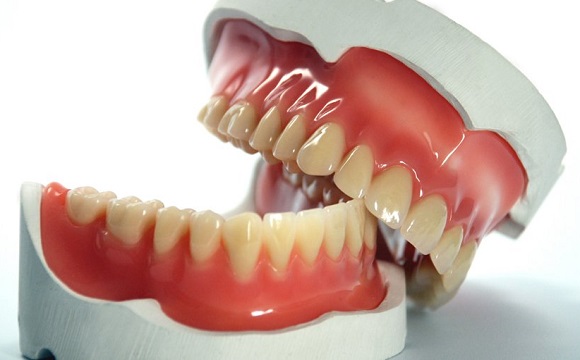
Total dentures
-
Acrylic (hard plastic) partial dentures
-
Cast metal dentures
-
Acrylic (flexible plastic) partial dentures
-
- Fixed prosthodontics
-
Crowns
-
Bridges
-
- Combined (fixed-mobile) dental work
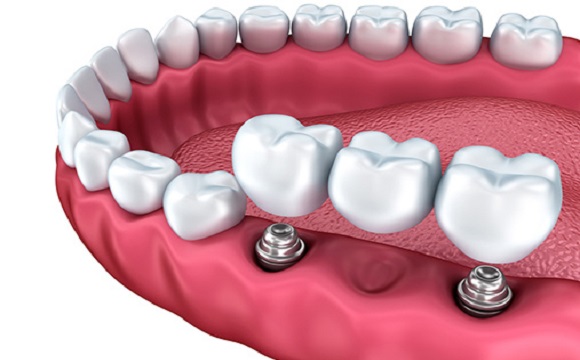
- Prosthodontics on dental implants
All fixed dental works are made from two types of materials: metal-ceramic, non-metallic- zirconium ceramics
After a clinical examination and X-rays analysis we talk to the patient about his wishes and possibilities and make a treatment plan. Detailed treatment plan and a cost estimate are presented to the patient before the beginning of the treatment. The works are finished in a very short period, and the patients are given temporary prostheses or implant prostheses, so that they can continue with everyday activities and social contacts. They are not toothless and treated teeth are not sensitive. We give a long-term guarantee on all works.
Total dentures
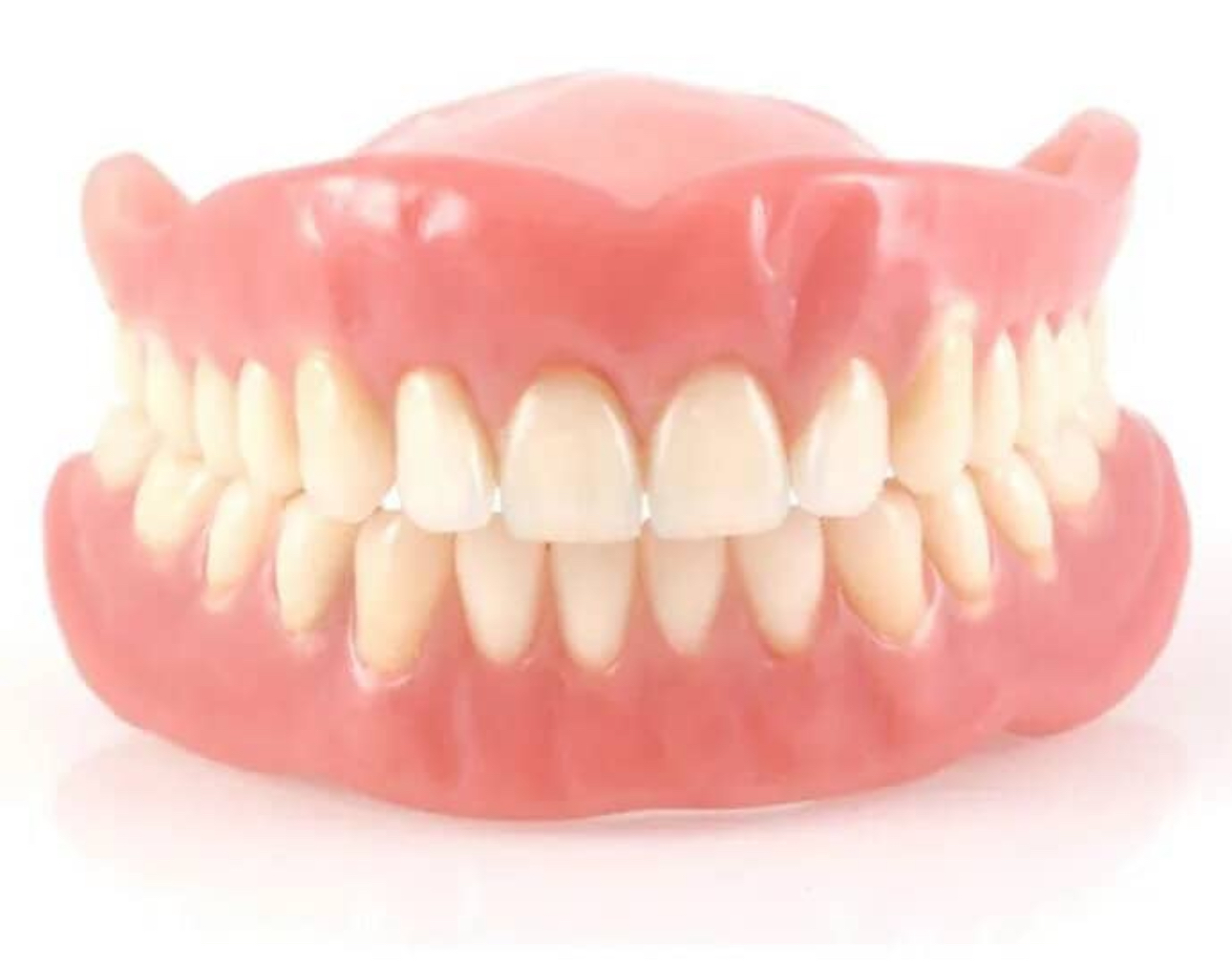
Total dentures are made in cases where the patient has no teeth. Their making goes through five stages and each of them has the same importance for the quality of the future prosthesis.
During the first visit, very precise initial impression of all anatomical structures of the jaw is taken with a standard impression tray. Based on this impression, the stone model of your jaws is made in the dental laboratory and the dental technician creates a custom impression tray which is necessary for the next phase.
On the second visit, a custom impression tray is used to take second, much more detailed and accurate impression of the toothless jaws. This is a much more precise impression than the one from the first visit. It is taken with highly precise impression materials. During this phase, while waiting for the impression material to harden, you pronounce certain voices and make certain grimaces.
The third visit is reserved for determination of the interjaw relationships. This means that we are determining the length and width of your future teeth, the smile line, the lips angles and the relationships of the future dentures. At this stage, you can bring us photographs of your natural teeth and express your wishes in terms of aesthetics.
After this phase, the dental technician is placing the selected denture teeth in the correct position, so in the fourth visit the arrangement of teeth is tested in the mouth so that adjustments can be made to the occlusion. At this stage, you can suggest us to change on your teeth everything that you may not like (color, shape, position ... etc.).
The fifth and final phase is when we give you your total denture.
At the beginning of wearing total dentures, it will be unusual for you to get used to your new teeth, but it's really important that you wear your denture constantly, without interruption, and that you read aloud the newspapers, a book ... anything in order to get used to the new pronunciation of certain votes.
The normal and expected reaction after 2-3 days is that your dentures cause sore spots as they compress the denture-bearing soft tissues, in which case you call us and come to make a few denture adjustments. Some patients need one correction, while others need two, three or even more. After a certain period (usually after 6 months), it is necessary to come for a denture relining.
Total dentures are made of acrylic. In the upper jaw, they spread over the whole palate, while in the lower one they cover only places (ridges) where teeth were. Depending on the surface of the prosthesis, the larger the denture, the better the retention and the dentures are more stable in the mouth. Consequently, it is more difficult to get used to the lower dentures than on the upper.
Dental crowns
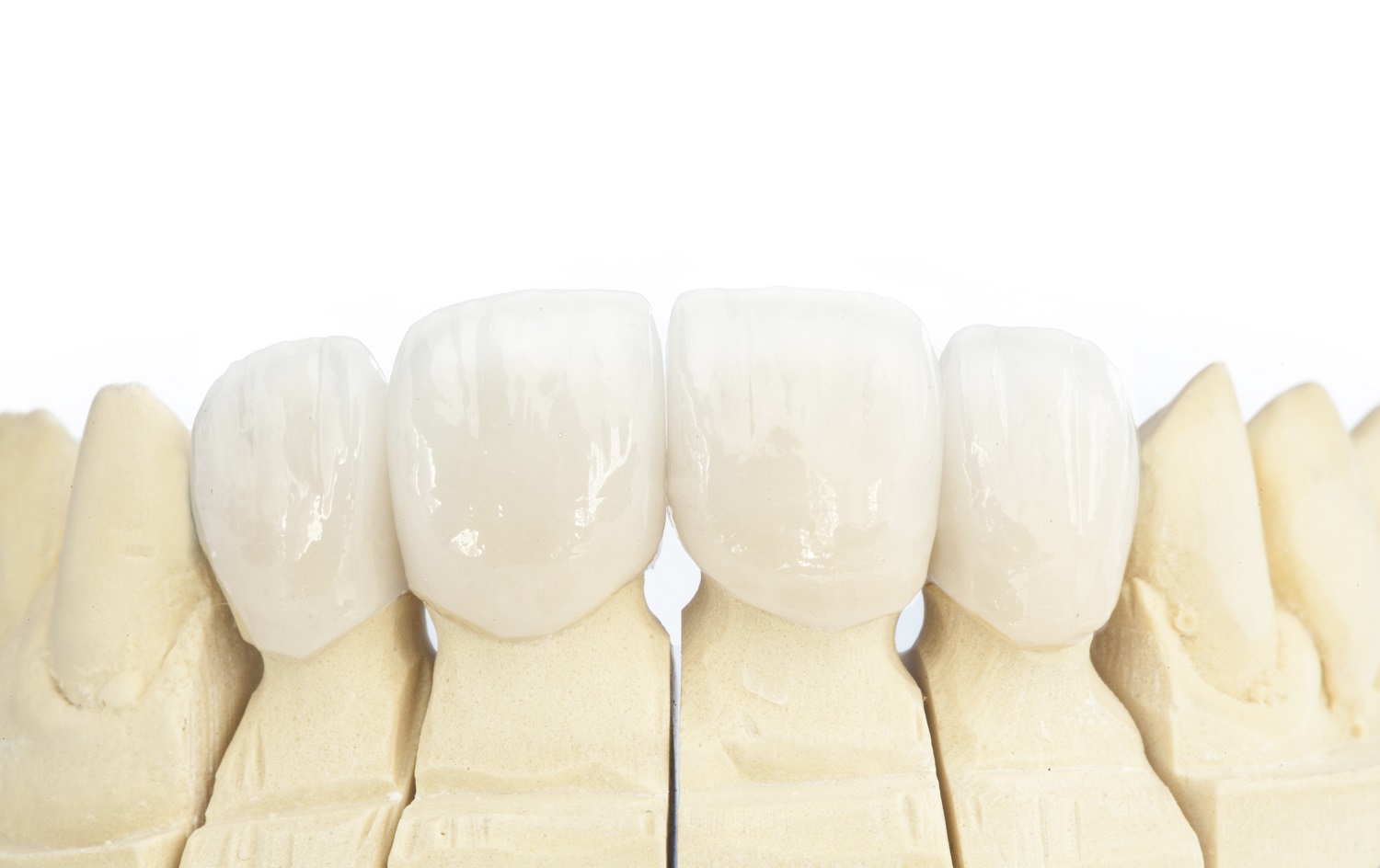
Crowns are fixed prosthodontics restorations that replace only one tooth. They can be made in cases where the tooth is so devastated that the filling could not solve the problem, or when we want to achieve better aesthetic results.

First, your tooth is prepared by removing an equal amount of dental substance from all sides, and the rest is shaped like an abutment. Then impression is taken, and the crown is made in the dental laboratory. The finished crown is then permanently cemented on your tooth.
If the tooth is so destroyed that only the root remains, first we make a post and core that is cemented in the root canal, and the crown part of it looks like an abutment. The tooth crown is replaced by its metal-ceramic or ceramic restoration.


In cases where the whole tooth is missing, the root part can be replaced by the implant, but more about this in the part - prosthetic on dental implants.
There are two different types of materials used for dental crowns:
-
Metal ceramic crowns
-
All-ceramic crowns
Metal ceramic crowns consist of a metal interior or base which is fused to porcelain crowns. The metal is coated on all sides with ceramics, so it can't be seen in the mouth. It can be made on all teeth, but the most common indication is the side teeth.
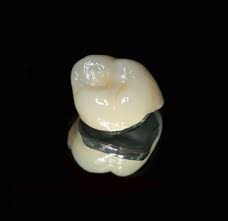
All-ceramic is a material that does not contain any metal and consists entirely of porcelain. These are mostly aesthetic restorations, they are more expensive than metal ceramic crowns and are usually made on the front teeth.

Dental Bridges
In cases where one or more teeth are missing in the jaw and the remaining teeth are strong and massive enough to handle the load of the missing teeth, a dental bridge is made. It is a fixed restoration that is permanently cemented in the oral cavity and cannot be taken out of it as it is the case with the dentures.

Each dental bridge must have at least two abutment teeth adjacent to the tooth that is missing. The abutment teeth are prepared from all sides, impression is taken and sent to dental lab for the casting of the metal alloy construction, so your second visit will be reserved for trying on that metallic base. After that, the metallic base returns to the dental lab, and the future teeth are modeled in ceramics. The definitive bridge is first temporarily cemented for a certain period, and after some time, permanently. The time required for making a dental bridge is one week.

If several teeth are missing, then a larger number of abutments must be included in the bridge construction. The making of so-called circular bridges, in which all the teeth of the upper or lower jaw are included, is increasing by the day.

Bridges, as well as crowns, can be metal ceramic or all-ceramic.
COMBINED FIXED-MOBILE PROSTHETIC RESTORATIONS
Combined fixed-mobile prosthetic restorations are often the perfect solution for patients with a small number of remaining teeth. These restorations consist of two different components. The first restoration is fixed and can be made as a milled crown or bridge depending on the number of the remaining teeth. It is permanently cemented in the patient's mouth. The second restoration is mobile and is made as a cast metal partial denture that is attached to fixed work. Instead of the cast metal dentures, thermoplastic dentures can be made as a mobile restoration.
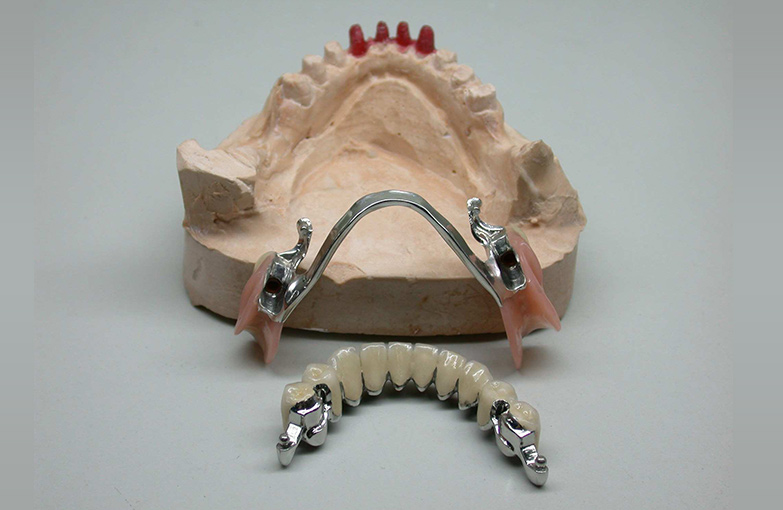
There are two common indications for making combined work. The first is when the patient has anterior teeth, no side teeth, and there are no conditions for dental implants. Then all the front teeth are connected in a block by making a metal-ceramic bridge that is cemented. Side teeth are restored by cast metal or thermoplastic dentures. When cast metal dentures are finished, the connection between fixed and mobile work are attachments or double crowns. Attachments are connections which mostly resembles snap buttons. On the last crown of the fixed restoration there is a part of the attachment, on the first crown of the cast metal dentures extends the other part that interacts with the first one, locks it as a snap button, thus forming a solid connection.

The second common indication is if the patient has only two or three teeth left. They are prepared, milled crowns are made and cemented. All other teeth are restored by a cast metal dentures.
Splintovi
Okluzalni splintovi (tzv. night guard)
Koriste se najčešće u slučaju bruksizma (nesvesno škripanje zubima, najčešće u toku noći) i bruksomanije (svesno škripanje zubima u budnom stanju).
Koriste se u cilju smanjenja abrazije i zaštite zubnih tkiva, smanjenja opterećenja na potporna tkiva zuba i smanjenja bola u viličnim mišićima.

Takođe, koristi se i kod sportista da bi se smanjila mogućnost povrede zuba i njihovog trošenja.
Na osnovu uzetog otiska zuba gornje i donje vilice, izrađuje se individualno za svakog pacijenta.
Kod sportista se najčesće radi splint samo za gornju vilicu.
Najčešće primenjivani su stabilizacioni okluzalni splintovi, izrađuju se od čvrstog gumenog materijala debljine 2mm koji prekrivaju sve zube.
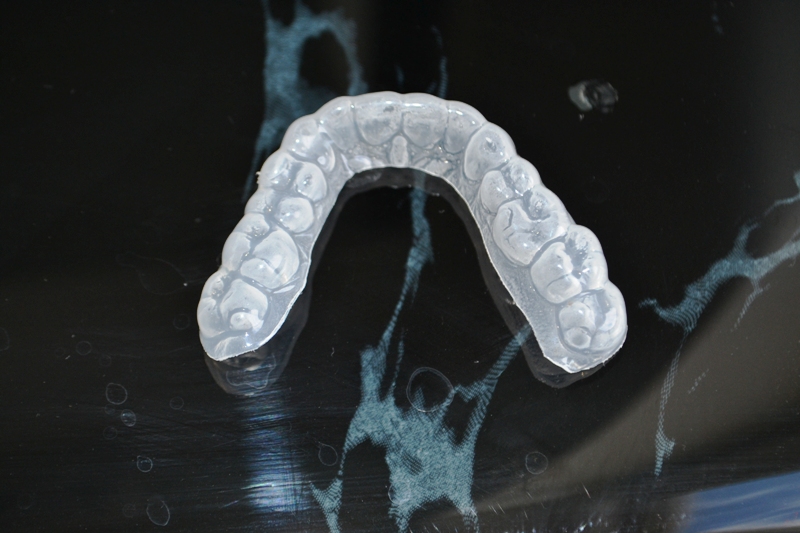
Retencioni splint (retenciona folija)
Nakon završene ortodontske terapije neophodno je izraditi retencioni splint kako bi se sprečilo eventualno vraćanje zuba u položaj pre postavljanja fiksne proteze. Retencione folije ili retencioni splint su folije koje se postavljanju preko svih površina zuba.
Da bi se izradio retencioni splint potrebno je uzeti otisak zuba nakon uklanjanja fiksne proteze. Iz otiska se pravi gipsani model na koji se postavlja razmekšala folija, koja poprima oblik zuba. Splint se obrađuje i daje pacijentu na korišćenje.
Nakon uklanjanja fiksne proteze, splintovi se u početku nose što češće. Posle nekoliko meseci preporučuje se da se splintovi nose noću u toku spavanja. Oni su neka vrsta “nevidljive” proteze. Folije ne izazivaju nikakvu nelagodu i prozirne su, što su njihove glavne prednosti